


Maze Clear: Tap Away Puzzle
4.91.10K Reviews
App Specs
- Version
- 1.2.4
- Updated On
- License
- Free
- Downloads
- 1,000,000+
- Developer
- Flyfox Games
- Categories
- Puzzle
- Platform
- Android
Screenshots
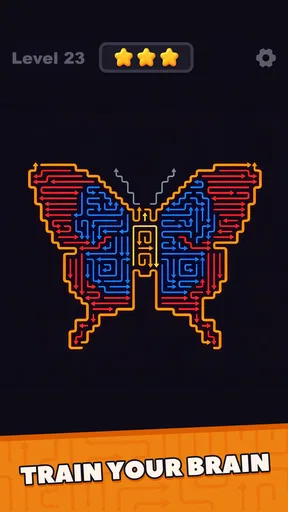
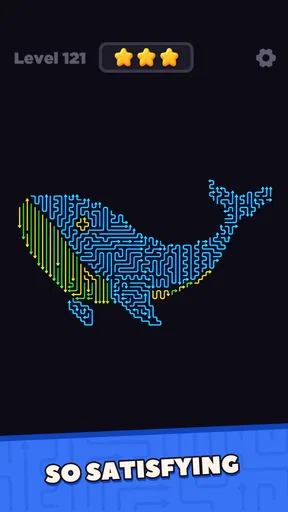
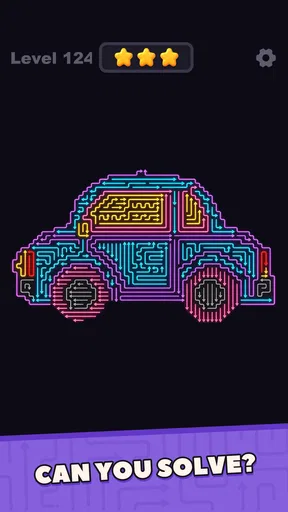
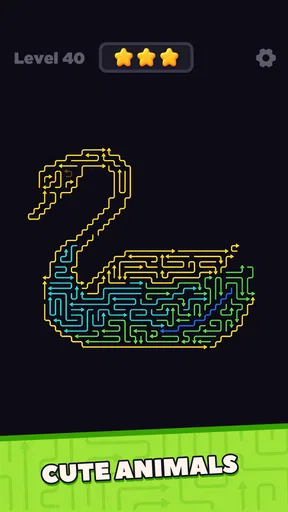
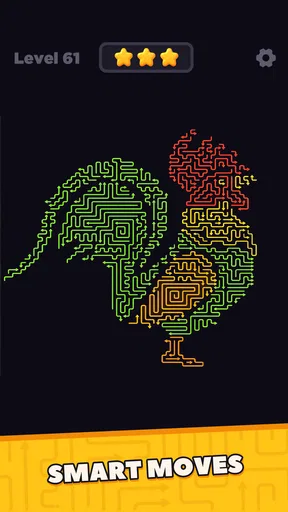
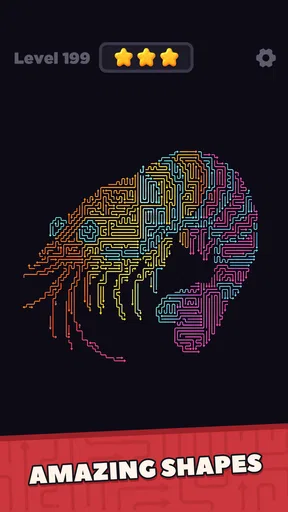
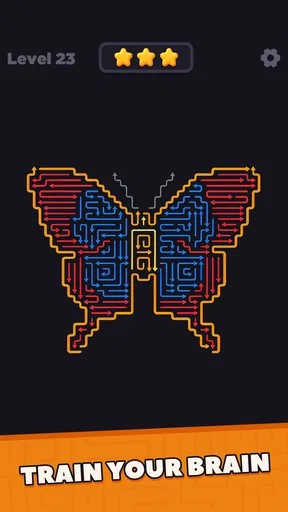
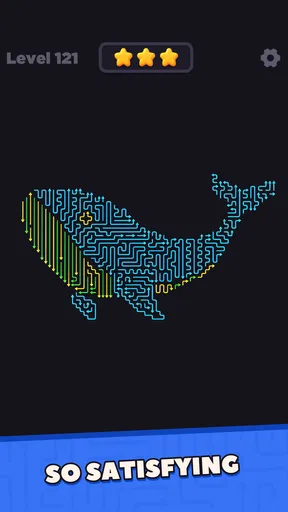
 Analysis by AppCompare
I found Zapout™ most appealing when I wanted a puzzle that could be understood immediately but still made me pause before every move. The idea is simple: arrows point toward possible exits, and I tap them to clear the maze. What makes the experience work is that a move that looks obvious can be blocked by the surrounding layout, so the real challenge is reading the board in the right order rather than tapping as quickly as possible.
This is a free puzzle game from Flyfox Games, aimed at Everyone and available for devices running Android 7.0 or later. Its store identity is brief, but after spending time with it, I would describe it as a calm, visual sorting puzzle with a light brain-training feel. It is not built around a complicated story, a large cast of characters, or a long list of rules. The board itself is the content, and your job is to turn a crowded arrangement into a sequence of safe decisions.
The game has already reached over a million installs and holds a 4.9 average from around 93 thousand ratings, which suggests that its quick-to-learn format has found a broad audience. I can understand that appeal. A first-time player can begin without studying instructions, yet the later decisions demand more attention than the opening tap might suggest.
What the first few minutes really feel like
When I start a level, I do not think of the maze as something to solve in one glance. I treat it more like a small traffic problem. Each arrow appears to offer a route, but nearby pieces may interfere with that route. The useful question is not simply “Which arrow can I tap?” but “Which arrow can move now without making the remaining board harder to read?” That change in mindset is the first meaningful step toward consistent progress.
The early boards are reassuring because the central action is so direct. I tap an arrow, watch the board change, and immediately see whether that choice opened space or created a new problem. There is no need to learn a character ability, manage an inventory, or remember a complicated scoring system before enjoying the puzzle. The feedback comes from the arrangement in front of me.
That simplicity also creates the main source of tension. A player who taps every apparently available arrow may quickly lose the useful structure of the board. I had better results when I slowed down and scanned the whole layout first. I looked for arrows with a clear path, then checked whether removing one would expose another. In many situations, the best first action is not the most visually prominent piece; it is the one that reduces congestion.
For a first-time user, I recommend resisting the urge to rush through the opening levels. Use them to learn how the board communicates. Notice which pieces become accessible after a removal, which directions remain blocked, and how much information is revealed by a single successful tap. The game rewards observation more than speed, so a careful start is not wasted time.
Worth Reading Before You Choose

EA SPORTS FC Mobile 26 Is a Bigger Football Game, but It Takes Time

Flipboard Shows What News Apps Must Do Beyond the Feed

Switching to Android Auto Means Rethinking Your Driving Routine

Google Calendar Makes a Crowded Week Easier to Manage

Ludo King Makes the Most of the Minutes Between Plans

Baby Panda World Brings Quick Play to Modern Phones, but Its Game Library Feels Busy
The relaxed tone is a strong fit for short sessions. I can imagine playing while waiting for an appointment, taking a break from work, or winding down before bed. Each puzzle gives me a small target, and the visual change after a correct move provides enough satisfaction without demanding a large time commitment. At the same time, it is not completely passive. If I am tired or distracted, I make poor choices because the board still expects me to plan.
That balance is important. Zapout™ is gentler than a timed arcade puzzle, but it is more mentally involved than a game where I simply match identical pieces. The pressure comes from the possibility of creating an awkward order, not from a countdown. Players who enjoy arranging, untangling, and spotting dependencies will probably settle into its rhythm quickly.
Getting ready without overthinking the install
The game is free to start, which makes it easy to try without committing money first. The current version is 1.2.3, and the listed age rating is Everyone, so it is positioned as a broadly accessible puzzle rather than a mature or story-heavy title. I would still approach it with the expectations of a free mobile game: the basic entry point is friendly, while optional purchases are listed at $7.99 per item.
That price matters mainly because it changes how I evaluate the game’s role on my phone. I see it as a casual puzzle I can sample and keep only if the board design holds my attention. I would not buy anything immediately. First, I would play enough to decide whether I enjoy the central process of planning arrow order. If the pleasure comes from solving the layouts themselves, the free starting point may be all I need. If I later want an optional item, I would make that choice deliberately rather than treating it as part of the installation.
On a first launch, my practical advice is to keep the setup simple: open the game, begin with the first available puzzle, and avoid trying to predict the entire progression from the opening screen. This kind of game explains itself through interaction. The first clear board is more useful than a long explanation because it shows how an arrow responds, how space changes, and why order matters.
I also suggest playing with a little uninterrupted attention for the first few minutes. A quick puzzle can look ideal for multitasking, but the opening learning moment is easier when I am not switching between messages or music controls. Once the basic relationship between arrows and exits feels natural, the game becomes much easier to pick up in brief bursts.
The first successful move and why it matters
My first satisfying success came from treating one arrow as a key rather than as a destination. I scanned for a piece whose route was least obstructed, tapped it, and then used the newly opened space to reassess the rest of the maze. That second look was essential. I did not simply repeat the same action; I updated my plan after the board changed.
This is the habit I would teach a friend: make one safe move, then read the board again. Trying to memorize a complete solution before touching anything can be unnecessary, especially on a compact layout where one removal changes what is visible. The game becomes less intimidating when I allow the puzzle to reveal itself in stages.
A useful routine is to divide the board into three mental groups. First, I identify arrows that appear to have an unobstructed route. Next, I note pieces that might become available after one removal. Finally, I leave the most crowded area alone until I understand which surrounding pieces need to move first. This is not a formal mode or a special feature; it is simply a practical way to prevent random tapping.
Another small technique is to look for the move that creates the most information. Sometimes removing an easy arrow does more than clear one piece. It exposes the direction of another arrow or makes the boundary of the maze easier to read. That kind of move is valuable even when it does not immediately produce a dramatic change. It reduces uncertainty, which is often more important than clearing the largest visible object.
When I make a wrong choice, I do not automatically assume the whole puzzle is lost. I pause and inspect what changed. If the remaining arrangement still has a clear route, I continue from the new position. If my earlier order has made the board confusing, I treat that attempt as a lesson about dependencies. The game’s basic loop encourages this kind of adjustment because each tap gives immediate visual information.
Where new players can get confused
The biggest confusion is assuming that every arrow that looks tappable is equally good. In practice, an available move and a useful move are not always the same thing. One arrow may leave the board technically playable while another opens a cleaner chain. I found that choosing based only on what is closest to an exit often leads to more hesitation later.
A second source of friction is visual overload. When several arrows point in different directions, my eyes can jump between them without forming a plan. The cure is to stop looking at the entire maze as one image. I focus on a small cluster, trace the likely route of one arrow, and then check whether that route crosses or depends on another piece. This makes the puzzle feel like a sequence of local decisions rather than a wall of symbols.
It is also easy to confuse speed with skill. Because the main action is a tap, I may expect fast play to be rewarded. My experience was the opposite: the strongest approach was usually a short pause before each meaningful move. There is no benefit in creating extra uncertainty just to finish a board a little sooner. For players who enjoy timers or rapid reactions, this slower pace may feel under-stimulating.
The game can also frustrate anyone looking for a large variety of puzzle rules. Its appeal comes from refining one central idea, not from constantly changing genres. If I want wordplay, physics experiments, narrative choices, or elaborate logic grids, this will not replace those alternatives. Zapout™ is more focused. That focus is a strength when I want a clean mental exercise, but it can feel narrow during a long session.
Another trade-off is the lack of a strong reason to keep playing beyond the next layout. The immediate goal is clear, and that is enough for a short break, but players who need a story, character progression, or competitive ranking may find the motivation limited. I would choose it for the act of solving, not for a surrounding reward system.
How I use it in an ordinary day
One realistic use is a ten-minute reset between demanding tasks. I can open a puzzle, study the available routes, and work through a few deliberate moves without needing to remember a complicated plot. The activity gives my attention one contained problem, which feels more refreshing than endlessly scrolling through unrelated content. When I finish, I can close the game without feeling that I have abandoned a major quest.
It also works well as a shared, low-pressure puzzle. I can show the board to another person and ask which arrow they would move first. Because the rules are visible, a newcomer can contribute almost immediately. That makes it more approachable than games where an experienced player must explain several systems before a second person can participate.
For children or younger players, the Everyone rating and straightforward interaction make the entry point approachable. I would still encourage an adult to pay attention to the purchase flow on a shared device, especially because optional items are listed at $7.99 each. The puzzle itself is easy to demonstrate, but responsible device settings remain sensible whenever a game includes in-app purchases.
For older players who want a gentle way to practice visual planning, the game may be a pleasant fit. I would not describe it as a substitute for formal training or a guarantee of improved cognitive ability. Its value is more modest and more immediate: it asks me to notice relationships, delay impulsive choices, and update a plan after each change.
What it does better than familiar puzzle alternatives
Compared with match-three games, this title gives me less emphasis on chain reactions and more emphasis on order. I am not searching for identical colors or waiting for a lucky combination. The board asks me to understand direction and obstruction, so success feels more connected to my reading of the layout.
Compared with traditional Sudoku or crossword apps, the commitment is lighter. I do not need to maintain a large set of notes or hold many abstract possibilities in my head. The information is visual and immediate. That makes it a better choice when I want a puzzle I can enter quickly, although it may be less satisfying for someone who enjoys deep deduction over a longer uninterrupted session.
Compared with physics-based escape puzzles, Zapout™ is cleaner and more predictable. I am not waiting for objects to behave unexpectedly or experimenting with a large collection of tools. The trade-off is that there is less room for creative experimentation. The challenge is primarily in sequencing, so players who enjoy discovering surprising interactions may prefer a different category.
Its strongest comparison point is convenience. I can understand the objective almost instantly, and the first successful action teaches me more than a lengthy tutorial would. That makes it especially suitable for a phone user who wants a focused puzzle without a heavy setup. The same simplicity means it will not satisfy everyone looking for a rich, evolving game world.
Small habits that make later puzzles easier
I get better results when I inspect the edges before the center. Boundary pieces often make the direction of movement easier to understand, while central clusters can contain several dependencies at once. This is not a universal rule for every board, but it gives me a calmer starting point than tapping the most noticeable arrow.
I also avoid planning too far ahead when the layout is dense. I choose a move with a clear benefit, then reassess. Long plans can become outdated after one removal, and forcing them can make me ignore a newly opened route. The game rewards flexible thinking more than a rigid memorized sequence.
When I am stuck, I change the question. Instead of asking which arrow should leave next, I ask which piece is preventing me from seeing the next useful route. That shift often reveals that the obstacle is not the target I first noticed. It is a practical distinction between solving the visible problem and solving the structural problem underneath it.
I would also stop a session after several careless attempts rather than continuing out of irritation. Because the game depends on visual attention, fatigue can make every arrow look equally important. A short break often helps more than repeated tapping. This is one reason I see it as a relaxing puzzle rather than a game that should occupy an entire evening.
Who should try it and who should skip it
I recommend it to players who like compact logic challenges, visual organization, and gradual improvement through observation. It is particularly good for someone who wants a free game that can be learned in moments and played in short sessions. The broad age rating also makes it an approachable choice for families, provided purchases on the device are handled carefully.
I would be more cautious about recommending it to players who need constant novelty. If your ideal puzzle game changes its rules frequently, tells a story, or offers a large strategic system, the focused arrow-and-maze format may feel repetitive. Likewise, people who prefer fast reflexes may find the deliberate pace too quiet, while players who dislike trial and error may become frustrated when an early move produces an awkward board.
The high average rating and large install base suggest that many players connect with its accessible design, but popularity does not remove the personal trade-off. I enjoyed the clarity of the central mechanic more than the idea of chasing a long-term progression. I would keep it installed as a reliable short-session puzzle, not as my only game.
My recommendation after spending time with it
Zapout™ succeeds because it turns a small set of arrows into a surprisingly thoughtful exercise in timing and attention. The first meaningful success is easy to reach: find a clear route, tap once, and use the changed board to make the next decision. From there, the game becomes a quiet test of whether I can avoid impulsive choices and recognize which move creates room for the others.
Flyfox Games has kept the entry point approachable, and the free price makes experimenting straightforward. The listed version is 1.2.3, with support beginning at Android 7.0, so it is accessible to many older Android devices as well as newer ones. I would remember that optional purchases cost $7.99 per item and decide about them only after confirming that the core puzzles genuinely suit my habits.
My final view is positive but specific: this is a good choice when I want a clean, low-pressure puzzle that rewards careful sequencing. It is not the right pick for a player seeking a story, intense action, or a constantly expanding set of mechanics. If you enjoy looking at a crowded board, finding the first safe opening, and feeling the layout become manageable one tap at a time, Zapout™ is worth trying for its focused puzzle loop.
Pros
- Simple tap-to-remove controls are easy to learn for all ages.
- Short levels make it convenient for quick gaming sessions.
- Gradually increasing difficulty keeps the puzzle format engaging.
- Clean visual design makes blocks and movement paths easy to read.
- Playable offline
- making it useful when no internet connection is available.
Cons
- Later puzzles can feel repetitive because the core mechanic stays unchanged.
- Some levels may require trial and error rather than pure logical planning.
- Hints or extra assistance may be limited unless earned or purchased.
- Ads can interrupt the experience
- depending on the version and session.
- Small visual details may be harder to distinguish on compact phone screens.
FAQs for Maze Clear: Tap Away Puzzle
What is Zapout™: Tap Away Puzzle?
Zapout™: Tap Away Puzzle is a casual 3D puzzle game centered on clearing groups of blocks from a board. You tap pieces in the correct direction or order so they can leave the structure without being blocked by neighboring pieces. As levels progress, layouts become more complicated, requiring observation, planning, and sometimes a willingness to rethink your first moves rather than tapping randomly.
How do you play Zapout™: Tap Away Puzzle?
Gameplay is based on identifying which blocks can move safely and tapping them to remove them from the puzzle. The main challenge is that some pieces are trapped behind others, so every move can affect the remaining layout. Rotating or examining the board carefully is important, especially on larger levels. Players who plan several moves ahead will generally progress more consistently than those relying only on quick taps.
Is Zapout™: Tap Away Puzzle free to download and play?
Zapout™: Tap Away Puzzle is generally offered as a free download, allowing players to begin solving puzzles without paying upfront. However, free mobile games may include advertising, optional in-app purchases, or both. The exact availability of ads, boosters, extra lives, and paid items can vary depending on the platform and version. Check the store listing before downloading if pricing is important to you.
Does Zapout™: Tap Away Puzzle require an internet connection?
Some parts of Zapout™: Tap Away Puzzle may work without a constant internet connection, which is useful when playing during travel or in areas with weak reception. Nevertheless, online access may be needed for advertisements, purchases, synchronization, updates, events, or other connected features. Because requirements can change after updates, it is best to test the game offline after installation rather than assuming every feature will remain available.
Is Zapout™: Tap Away Puzzle suitable for children and casual players?
Zapout™: Tap Away Puzzle is designed to be easy to understand, making it approachable for casual players and puzzle fans who prefer short sessions. The basic tapping mechanic does not require advanced gaming experience, although later stages can demand patience and careful planning. Parents should still review the store rating, advertising behavior, privacy information, and any in-app purchase options before allowing children to play.


